Costly Risks of Cheap Hotel Lighting | Minoze Lighting
Discover the hidden costs of cheap hotel lighting. Learn how hotel procurement teams avoid PIP budget overruns, U.S. Customs delays, and transit damage.
The Hidden Cost of Cheap Hotel Lighting: How to Avoid PIP Budget Overruns and Construction Delays
The lowest hotel lighting quote rarely means the lowest project cost.
Many hotel owners, procurement teams, and project managers treat lighting as a simple FF&E category. They review samples, check specs, and place orders based on unit price. But cheap fixtures are a frequent cause of Property Improvement Plan (PIP) overruns, construction delays, and costly field failures across the project lifecycle.
A low-cost hospitality lighting supplier can become a serious liability. Hidden freight charges, U.S. Customs delays, and transit damage all add up fast. Union labor corrections and rushed air shipments make it worse. These issues erode margins, stall business operations, and put project goals at risk long after the purchase order is signed.
To protect your project, evaluate hospitality lighting suppliers by total risk — not unit price alone.
1. Freight Gaps: Understanding True Landed Cost
A quote that stops at FOB Port of Origin exposes your project to unpredictable costs. Many hotel construction projects exceed their lighting budgets because procurement teams base decisions on factory pricing, not actual landed cost.
Hidden expenses in imports and exports often include:
- Ocean freight surcharges during peak seasons
- Customs broker fees and import duties
- Port storage charges and container demurrage
- Final-mile transport, liftgate fees, and limited-access surcharges
These costs surface weeks after the order is placed. By then, your project schedule is already moving.
The U.S. Customs and HTS Code Risk
If a manufacturer files the wrong Harmonized Tariff Schedule (HTS) code or submits incomplete paperwork, U.S. Customs may hold the shipment. The customs clearance process then becomes a serious bottleneck — triggering long inspections, delayed container release, and growing port storage fees. For hotels with fixed opening dates in the United States, even a short U.S. Customs delay creates real financial damage.
The Final-Mile Gap
Many hotel sites lack loading docks during early construction phases. When vendors ignore liftgate needs, staging limitations, or remote resort restrictions, extra delivery charges erase the savings your procurement team thought it had secured.
The Fix: DDP Pricing
Smart procurement teams require Delivered Duty Paid (DDP) pricing. DDP covers manufacturing, international freight, customs clearance, duties, taxes, and final-mile delivery in one predictable number. No surprises. No guesswork. The customs clearance process becomes the supplier's responsibility, not yours.
2. Packaging Quality vs. Transit Damage
A hotel build runs like a chain reaction. When one trade stops, every trade behind it stops too. Lighting damage during shipping is one of the most common causes of avoidable FF&E delays on large-scale construction projects.
| Phase 1: Manufacturing | Phase 2: Logistics Protection | Phase 3: Site Delivery |
|---|---|---|
| Precision CNC Production | ISTA Drop-Tested Packaging | Floor-by-Floor Staging |
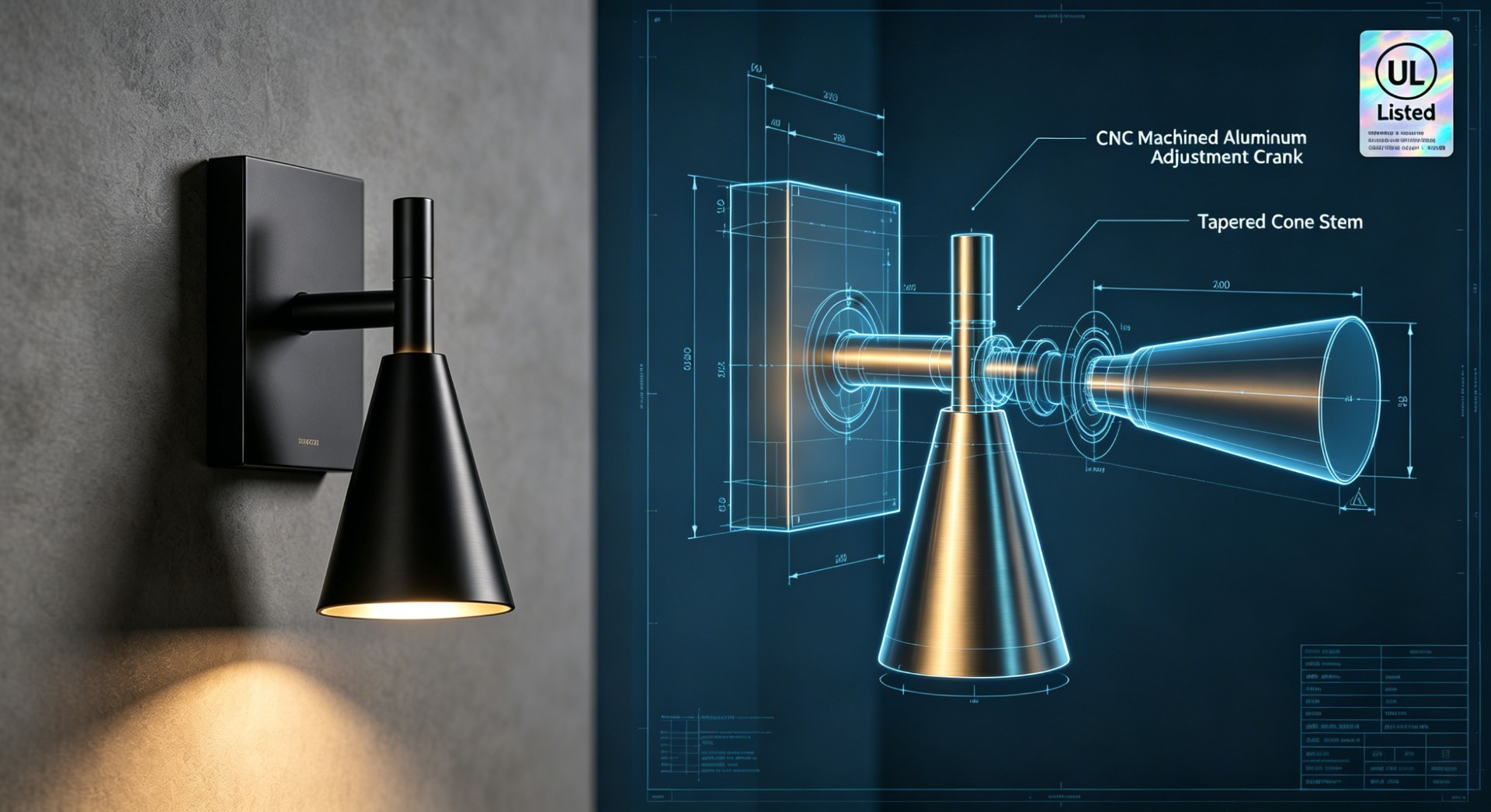
| Machined aluminum cranks and tapered cone stems eliminate field failures and design drift during mass production. | Custom foam and reinforced crates protect glass, fabric shades, and metal arms in transit. | Pallets are labeled by room type and staged to match the contractor's install sequence. |
The Breakage Problem
Hotel lighting fixtures often include fragile parts: glass globes, large fabric shades, natural stone elements, and long metal arms. These rarely survive rough transit without high-quality, engineered packaging.
Cheap packing is never worth the risk. It leads to broken fixtures and high quality shortfalls that are hard to recover from. Broken fixtures mean replacement orders, premium air freight costs, and delayed room turnover. A damaged fixture can stall your Certificate of Occupancy (CO). That delay has a direct cost to business operations.
The Staging Challenge
A large-scale hotel renovation may involve thousands of fixtures across multiple floors. Receiving all products at once creates storage chaos on site and puts real pressure on project teams.
Experienced hospitality lighting manufacturers schedule deliveries floor by floor. They label pallets by room type and time shipments to match the contractor's day-to-day installation sequence. This cuts jobsite clutter and keeps trades moving on schedule.
3. True Commercial-Grade Construction
Hotel lighting faces far more day-to-day wear than residential fixtures. Guests use them constantly. Housekeeping cleans them daily. Maintenance teams expect years of reliable service.
Component quality and raw materials separate a spec-grade fixture from a cheap alternative.
Heavy-Duty Materials Built for Hotels
Always verify these three details before approving a production sample:
- CNC-Machined Aluminum Hardware: Machined aluminum cranks keep joints and reading arms tight under heavy guest use. They will not loosen, droop, or strip over time.
- Reinforced Mounts and Stems: Thick-walled tapered cone stems hold fixtures straight and prevent sagging even after years of day-to-day use.
- Commercial LED Drivers: Premium internal drivers eliminate early failures, buzzing sounds, and dimming problems across the property.
Sourcing the right raw materials at the engineering stage is far cheaper than fixing failures after mass production begins.
High-Quality Finishes That Last
A finish that peels under cleaning chemicals becomes a daily maintenance headache. Hospitality lighting manufacturers must provide real performance data — not vague sales language.
Request verified salt-spray resistance hours, PVD coating thickness, and scratch ratings. This ensures your high-quality brushed satin finish still looks perfect during the final brand QA walk-through.
4. Eliminating the 12-Hour Time-Zone Bottleneck
Every hotel project hits field questions in real time. Mounting dims, driver wiring, dimming systems, rough-in tolerances — these come up fast. Slow answers stop project teams cold.
Direct Access to Engineers in Real Time
The best hospitality lighting manufacturers give project teams direct, real-time access to product engineers, CAD specialists, and project coordinators. No brokers. No middlemen. You speak directly with the factory professionals who understand the fixture.
Working closely with your supplier's technical team saves days on a tight schedule and prevents costly rework.
Stop Problems Before Mass Production
The easiest field issue to fix is the one that never happens. Before mass production begins, your supplier should deliver a full submittal package covering shop drawings, exact dims, mounting details, driver specs, and certification documents.
Clear submittals speed up approvals from the electrical engineer of record, ensuring compliance with local building codes before a single unit ships.
5. Removing Vague Language from Spec Sheets
Vague wording shifts risk onto your project. The less precise the spec sheet, the more liability lands on the developer or ownership group. Procurement teams must challenge unclear terms and require a high level of specificity.
| The Vague Statement | The Real Risk | The Standard You Need |
|---|---|---|
| "Internal components meet UL standards." | Parts may be certified but the full fixture is not UL Listed. Inspectors will fail the room. | Full-fixture UL or ETL Listing stamp applied at the factory floor. |
| "Commercial-grade finish." | No defined durability. Thin coatings fail within months under cleaning chemicals. | Explicit metrics: PVD plating thickness and verified salt-spray resistance hours. |
| "Equivalent substitutions permitted." | Factory swaps drivers or LEDs without approval. Early failures follow. | Zero Design Drift. Written sign-off required for all changes to specific projects. |
| "Dimmable LED system." | Dimming may conflict with your Guestroom Management System (GRMS), causing flicker. | Specific driver brand and control protocol (0-10V, ELV, or Triac) defined in writing. |
| "Custom fixture matches approved sample." | Mass production drifts from the prototype without strict quality controls. | Engineering-approved shop drawings enforced from first sample to final production batch. |
Using management tools to track specification changes across the project lifecycle helps teams catch substitutions before they reach the factory floor.
6. Choosing the Right Hospitality Lighting Manufacturer
Not every lighting company can handle commercial hospitality projects. Hotel lighting requires manufacturing expertise, engineering depth, ensuring compliance with safety standards, and end-to-end logistics control across complex supply chains.
When evaluating a hospitality lighting manufacturer, focus on four capabilities:
- Hotel Project Experience: Do they understand the design and spatial requirements for guestrooms, corridors, public spaces, and restaurants? ADA protrusion limits for wall sconces and corridor light spacing are non-negotiable in commercial hospitality construction projects.
- Compliance and Certification: Does the factory manage fully assembled UL or ETL Listings for every fixture? A compliance gap found during a final inspection in the United States causes catastrophic opening delays.
- Custom Manufacturing Capabilities: Can they take a designer's concept and turn it into a structurally sound, brand-compliant fixture at scale? That engineering depth separates real hospitality lighting manufacturers from catalog vendors.
- Supply Chain Reliability: Consistent production lead times, rigorous quality control, and robust supply chains protect your project cost far more than a low unit price.
Frequently Asked Questions
Why does hotel lighting cost more than residential lighting?
Hotel lighting is built for heavy day-to-day use, harsh cleaning chemicals, and strict commercial safety codes. Hospitality lighting manufacturers use thicker metals, premium LED drivers, and full safety certifications. The upfront cost is higher — but long-term maintenance and replacement costs across the project lifecycle are significantly lower.
What is the biggest risk when importing hotel lighting?
The most common risks are hidden freight surcharges, HTS code errors that trigger U.S. Customs delays, transit damage from poor packaging, and compliance gaps that fail inspection. Evaluating Total Cost of Ownership (TCO) through transparent DDP pricing is far more important than comparing factory prices alone.
What is the most common compliance error during inspections?
Assuming component-level certification equals full-fixture compliance. Internal parts may carry a UL Recognized mark. But inspectors require a complete UL or ETL Listing on the assembled fixture. Without it, they will reject the installation and delay your project scope.
What is DDP shipping?
Delivered Duty Paid (DDP) means the manufacturer handles everything: ocean freight, the customs clearance process, import duties, taxes, and final-mile delivery to your jobsite. All logistical risk stays with the supplier — not your procurement team.
How do you confirm mass production matches the approved sample?
Require engineering-approved shop drawings before mass production begins. Then request a first-article inspection (FAI) report comparing the first production unit against the approved sample across finish, dims, driver configuration, and labeling. This stops design drift before it reaches your specific projects at scale.
Conclusion: Buy Certainty, Not Just Fixtures
Hotel developers, ownership groups, and procurement teams are not simply buying hospitality lighting. They are buying predictability.
Successful hotel lighting procurement means full visibility into project cost, proven product durability, reliable floor-by-floor staging, real-time engineering support, and clean compliance documentation — from first sample through final inspection.
Evaluate hospitality lighting suppliers by total project risk. Not by unit price. That shift protects your schedule, your budget, and your opening date.
Planning a Hotel Renovation or New Build?
Whether you are managing a brand-mandated PIP renovation, a new hotel development, or a custom lighting package, working closely with the right hospitality lighting manufacturer significantly reduces your project risk.
Minoze Lighting works directly with hotel owners, procurement teams, interior designers, and electrical contractors to deliver high-quality hotel lighting solutions. We provide real-time engineering support, ensuring compliance documentation, quality-controlled mass production, and coordinated logistics from first sample to final inspection.
For sourcing inquiries, contact the Minoze Lighting team at simon@minozelighting.com